Sanchi Stupa is a UNESCO World Heritage site in Madhya Pradesh. Check out some interesting & fun Facts about the Great Stupa of Sanchi.
Facts About Sanchi Stupa
Sanchi Stupa is located in the Indian state of Madhya Pradesh. It is one of the most ancient and popular Buddhist monuments in the country. The construction of Sanchi Stupa is considered to be an engineering marvel. Though it has gone through a lot of wear and tear, it has stood the test of time, maintaining its ancient glory till date. The stupa is known for its intricate carvings, which provide an insight into the life of Lord Buddha. The structure is presently maintained by the Archeological Survey of India. It would interest you to know that the Sanchi Stupa was completely forgotten from the 13th to the 19th century. It was only until Sir John Marshal, the director of archaeology, re-discovered the monument and ordered the restoration work at the site. The highlights of the Sanchi Stupa are the four giant gateways and the large hemispherical dome. For some more interesting and fun facts about Sanchi Stupa, read on.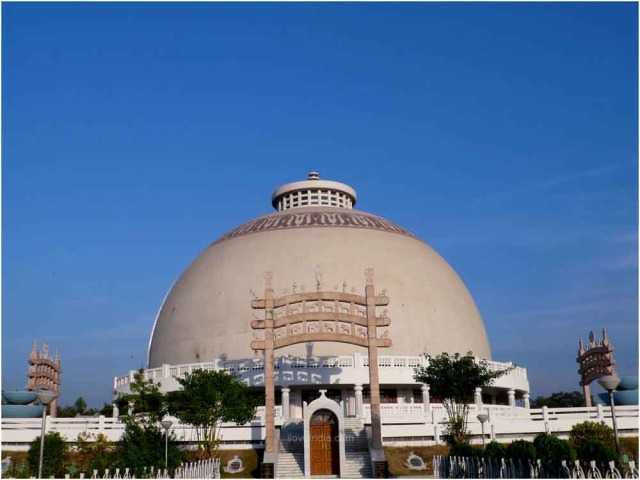
Fast Facts
Location: Sanchi, Raisen District, Madhya Pradesh
Built In: 273-236 BC
Built By: Emperor Ashoka
Dynasty: Maurya
Highlights: UNESCO World Heritage Site
Interesting & Fun Facts About The Great Stupa Of Sanchi
-
Sanchi Stupa is located in Sanchi that falls in the state of Madhya Pradesh.
-
The Stupa is a dome shaped mound, surrounded by a circumferential pathway.
-
The Stupa contains several chambers, which contains the relics of Buddha.
-
The original structure of the Stupa was commissioned by Emperor Ashoka.
-
The Stupa was enlarged in the first century CE.
-
The Stupa was once a reliquary mound, however, the stupa has now become a purely symbolic monument.
-
Did you know that a Chunar sandstone pillar carries the famous decree of Ashoka warning the people against faction in the Buddhist community.
-
The Sanchi Stupa contains the shrine of one of the Buddhist teachers from another stupa outside Sanchi.
-
The present Sanchi Stupa encases an earlier version of the stupa made of bricks and mud.
-
The Stupa is 120 feet across, excluding the railing and umbrella.
-
The height of the Great Stupa is 54 feet high (16.46 meters).
-
Sanchi Stupa went under major restoration work between 1912 and 1919, under the supervision of Sir John Marshall.
-
The Stupa is surrounded by four gateways - ‘toranas’, which are intricately carved.
-
Most of the Buddha statues and carvings at the Sanchi Stupa still possess the legendary Mauryan polish.
-
The gateways around the Stupa were erected in c. 35 BC.
-
The Stupa symbolized Buddha and eventually it became a symbol of his final release from the cycle of birth and rebirth - the Parinirvana or the ‘Final Dying.’
-
The three ‘parasols,’ set one above the other along the shaft, are located in the uppermost region of Sanchi Stupa. They represent a heavenly hierarchy.
-
The first reconstruction of the Stupa, which took place after the initial establishment, included a stone casing, a terrace with a double flight of steps, balustrades, a paved processional path and an umbrella and railing, all made of sandstone.
-
The great Sanchi Stupa was damaged in the middle of second century BCE.
-
The last addition to the Stupa was done during the rule of the Guptas, prior to 450 AD.
-
The last construction work on the Stupa included four effigies of Lord Buddha in stone, placed against the walls, facing the gates.
-
The four gateways depict scenes from the life of Lord Buddha and Jatakas tales, the stories associated with Buddha and his earlier births.
-
The crown of the Ashoka Pillar located here is famous for its four lions, which stand back to back.
-
It was from the Ashoka Pillar of Sanchi Stupa that the national emblem of India was derived.
-
Sanchi Stupa is a UNESCO World Heritage Site.
How to Cite








See also
More from iloveindia.com
- Home Remedies | Ayurveda | Vastu | Yoga | Feng Shui | Tattoos | Fitness | Garden | Nutrition | Parenting | Bikes | Cars | Baby Care | Indian Weddings | Festivals | Party ideas | Horoscope 2015 | Pets | Finance | Figures of Speech | Hotels in India : Delhi | Hyderabad | Chennai | Mumbai | Kolkata | Bangalore | Ahmedabad | Jaipur
- Contact Us Careers Disclaimer Privacy Policy Advertise With Us Lifestyle Sitemap Copyright iloveindia.com. All Rights Reserved.