Firefly is a beetle, mainly known for producing light inside its body. With this article, get some interesting facts & amazing information on fireflies.
Facts About Firefly
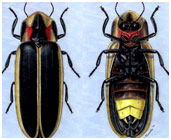
Firefly is the name of a beetle that is seen inhabiting all the continents of the world, except Antarctica. Also known as a lightning bug or glowworm, it has the ability to produce light within its body. Its light organs are located under the abdomen. When a firefly breathes in oxygen and combines it with luciferin—a substance present inside its special cells—the result is production of light, which has almost no heat. Fireflies are mainly found in moist habitats, such as swampy areas, fields, lawns and at the edges of woods or streams. The tropical fireflies found only in Southeast Asia and North America can synchronize their flashes with others in the group. Though, fireflies are such interesting and beloved insects, people know very little about them. In case you want to know more about fireflies, make use of the interesting and amazing information given below.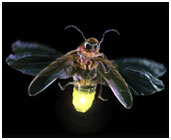
Fast Facts
Common Names: Firefly, Lightning Bug and Glowworm
Kingdom: Animalia
Phylum: Arthropoda
Class: Insecta
Infraclass: Neoptera
Superorder: Endopterygota
Order: Coleoptera
Suborder: Polyphaga
Infraorder: Elateriformia
Superfamily: Elateroidea
Family: Lampyridae
Subfamilies: Five
Species: Over 2000
Length: 5 to 25 millimeters
Diet: Omnivorous
Natural Habitat: Temperate and tropical environments
Incubation Period: 3-4 weeks
Interesting & Amazing Information on Fireflies
- A firefly is neither a fly, nor a bug. Rather, it is a beetle that belongs to Lampyridae family.
- There are around 1900 species of fireflies in the world and almost 170 species of fireflies found in North America.
- Firefly produces a cold light in its body, devoid of heat as well as any ultraviolet or infrared rays.
- The light that emerges from the body of a firefly has a wavelength ranging from 510 to 670 nanometers and is pale reddish, yellowish or green in color.
- Neither do fireflies bite, nor do they have pincers. Fireflies are soft bodied beetles and their size can vary from 5 to 25 millimeters. They do not carry any virus or disease and fly at a slow speed.
- A firefly spends most of its lifespan as a larva. In the adult form, it survives for a very short span.
- Female fireflies lay their eggs in the soil and even the latter are reported to glow in the dark.
- After hatching, the larvae spend the summer eating tiny insects, larvae, and even slugs and snails. Some species of fireflies even feed on human flesh
- After a firefly larva reaches adult stage, it usually stops feeding and survives on the nutrients built during the larva stage. Even when it does eat, it is mainly nectar or dew, for moisture.
- The main aim of an adult firefly is to find a mate and lay eggs before dying.
- Male and female firefly, both glow. However, their rhythmic flashing patterns depend upon the sex and the species.
- Different species of fireflies have different communication system, based on the lighting patterns. However, all fireflies do not flash to communicate. Some species of fireflies found in certain regions of North America don’t emit light to communicate.
- Fireflies produce light for three reasons: attracting mate, warning predators and telling other fireflies about danger.
- As a defense mechanism the fireflies shed drops of blood and the process is called ‘reflex bleeding’. There are poisonous contents in the blood, which can be fatal to certain animals.
- The German name for fireflies is Leuchtkafer and in Japanese fireflies is called Hotaru.
- The American states of Tennessee and Pennsylvania have named fireflies as their ‘State Insects’ whereas the city of Boon in North Carolina is known as the firefly capital of USA.
- Scientists have found that the firefly luciferase are extremely beneficial and can be used as markers to detect blood clots. Apart from this firefly luciferase can be used to tag tuberculosis virus cells, and also to administer the hydrogen peroxide levels in living organisms. Recently scientists have developed a synthetic form of luciferase that can be used for medical research as the commercial harvest of fireflies has posed great threats to certain species of fireflies.
How to Cite





See also
More in 'Society'
More from iloveindia.com
- Home Remedies | Ayurveda | Vastu | Yoga | Feng Shui | Tattoos | Fitness | Garden | Nutrition | Parenting | Bikes | Cars | Baby Care | Indian Weddings | Festivals | Party ideas | Horoscope 2015 | Pets | Finance | Figures of Speech | Hotels in India : Delhi | Hyderabad | Chennai | Mumbai | Kolkata | Bangalore | Ahmedabad | Jaipur
- Contact Us Careers Disclaimer Privacy Policy Advertise With Us Lifestyle Sitemap Copyright iloveindia.com. All Rights Reserved.