The white and black Panda bear is endangered specie found only in China. Find out interesting & amazing information about Panda Bears.
Panda Bear Facts
The black and white Panda bear is one of the most loved animals in the world. But unfortunately, it also happens to be an endangered species and is found only in China where it is protected by the law. There, this bear has been respected by the Chinese and is found in Chinese art too. First described by the French Missionary Pere Armand David in 1869, they attract worldwide attention. Research states that there are approximately about 1600 pandas left in the wild. They once lived in lowland areas, but farming, forest clearing and other development has now restricted giant pandas to the mountains and highlands in Central China’s Sichuan, Shaanxi, and Gansu provinces. This cute and beautiful animal is also being hunted down for its beautiful fur. In case you want to know more about the Giant Panda bear, then read the fast facts mentioned below in this article.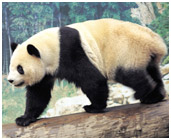
Fast Facts
Scientific Name: Ailuropoda melanoleuca
Kingdom: Animalia
Phylum: Chordata
Subphylum: NA
Class: Mammalia
Order: Carnivora
Family: Ursidae
Genus: Ailuropoda
Species: A. melanoleuca
Origin: Eastern China, Burma, Vietnam
Diet: Stems and leaves of bamboo
Height/Length: 10 feet
Weight: 150 kg (males), 125 kg (female)
Natural Habitat: mountainous forest regions with lot of bamboo
Lifespan: 20 years in wild and 30 years in captivity
Status: Endangered
Age of Maturity (females): 4 to 5 years
Age of Maturity (males): 6 to 7 years
Gestation Period: 95-160 days
Number of Offspring: 1 to 2
Interesting and Amazing Facts about Panda Bear
- There are just about 1,600 pandas left in the wild.
- The giant panda has got the biggest molar teeth in comparison to any of the carnivores.
- Even though regarded as carnivore, the panda's diet comprises mostly of bamboo. This animal normally spends about 14 hours a day eating.
- The panda’s forepaws have got an additional ‘thumb. The panda uses this in tandem with its other ‘forefingers’ to hold firmly even a small bamboo shoot.
- Panda does not hibernate as it cannot stock up adequate fat on a bamboo diet.
- Normally pandas wander about in the forest. But mother pandas stay within caves or in the tree hollows when they are to give birth to babies. They remain there for say three to four months even after their babies take birth.
- It was in 1869 when its skin was found by a French missionary, Pére David that the giant panda got discovered.
- Pandas are expert at climbing trees and swimming.
- Pandas prefer living alone. They meet other pandas only when they have to mate.
- A just born panda looks similar to a small white rat weighing about 3.5 ounces. This makes it about 1/900 of the mother's body weight.
- A female panda only comes into season for 72 hours a year.
- Pandas can live up to around 20 years in the wild.
- Female pandas begin procreating when four or five years old.
- Pandas have existed on this planet for over 3 million years.
- It is very difficult to spot a panda in the wild as they generally live in clusters of thick bamboo in the forest.
- Giant Pandas live up to 30 years in captivity.
- Giant pandas once they reach the age of six starts to have cubs.
- Female pandas give birth to one or two cubs in every two years. A cup Panda is nursed for the first four months after which it starts having bamboo.
- Panda is called as the ‘Big Bear Cat’ by the Chinese.
- Giant Panta’s skin is such that under its white fur, it has a black skin under which it has a pink skin.
- Giant Pandas cannot go without food for 5-6 hours and can eat more than 10,000 kilograms of bamboo in a day.
- People cannot tell whether a baby Panda is a boy or a girl until it reaches the age of four years.
- Pandas are pink in colour when they are born.
- A panda cub opens its eyes only after 50-60 days of its birth which makes it essential for the mother Pandas to stay with the cubs all the time.
- Cub pandas can climb huge trees even at the age of one.
- You don’t hear pandas making a scary roar as in the case of bears. Instead, they indulge in friendly bleating and honking or sneeze in a hilarious way to communicate with other Pandas.
- Pandas eat bamboo shoots and leaves though they eat vegetation, fish and small animals occasionally.
- Pandas are regarded as shy animals as they do not interfere into regions where people live which in turn results in Pandas being restricted to limited areas.
- Giant panda bears possess special front paws with the both the paws having five fingers and a thumb. The thumb is a wrist bone which has grown outward to enable Panda to grasp the bamboo stalks.
How to Cite



See also
More from iloveindia.com
- Home Remedies | Ayurveda | Vastu | Yoga | Feng Shui | Tattoos | Fitness | Garden | Nutrition | Parenting | Bikes | Cars | Baby Care | Indian Weddings | Festivals | Party ideas | Horoscope 2015 | Pets | Finance | Figures of Speech | Hotels in India : Delhi | Hyderabad | Chennai | Mumbai | Kolkata | Bangalore | Ahmedabad | Jaipur
- Contact Us Careers Disclaimer Privacy Policy Advertise With Us Lifestyle Sitemap Copyright iloveindia.com. All Rights Reserved.