Jellyfish is one of the most enigmatic and mystifying aquatic creatures found in the world. With this article, explore some interesting facts & amazing information on jellyfish.
Jellyfish Facts
Imagine a living organism with no heart, no nervous system, no blood and no brain? Sounds peculiar, right!! Jellyfish is one of the most baffling and inexplicable aquatic creature ever known to mankind which can yield around 45,000 eggs in one day. Comprising of about 95% of water content, Jellyfish has allured scientist and researchers since a long time. There are different species of jellyfish that are found all around the ocean. Right from the surface level to the deep sea, their existence can be felt everywhere and there population can decline in rainy season as they need salty water to survive. While it might seem all fancy, you would be surprised to know that some jelly fish are toxic and can cause death as well. One of the most distinctive characteristic of jellyfish is that it grows all throughout its life and the biggest jellyfish is known by the name, ‘lion’s mane’. To get some more interesting facts and amazing information on jellyfish, browse through the following lines.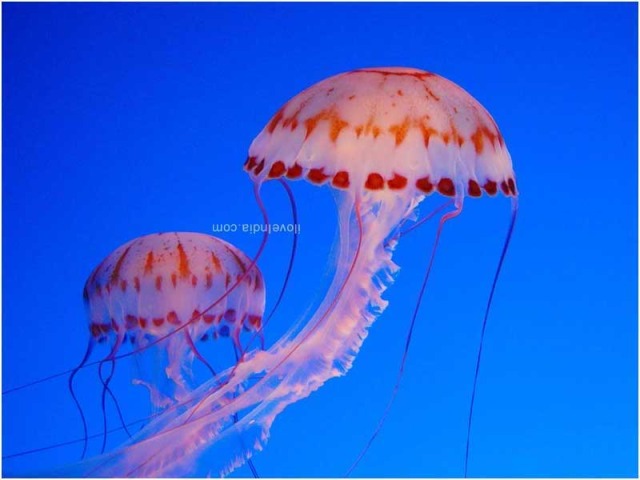
Fast Facts
Kingdom: Animalia
Phylum: Cnidaria
Class: Scyphozoa
Order: Stauromedusae, Coronatae, Semaeostomeae, Rhizostomae
Species: Scyphozoa, Staurozoa, Cubozoa and Hydrozoa
Weight: 95% water content
Largest Species: Lion's Mane Jellyfish (Cyanea capillata)
Natural Habitat: All around the ocean
Diet: Small Fish & Zooplankton
Age: A few hours (in case of some very small hydromedusae) to several months
Interesting & Amazing Information On Jellyfish
- Jellyfish are made up of more than 95% water. They have soft and delicate body, lacking a skeletal structure or outer shell.
- Jellyfish come in a variety of colors and shapes. They can be dome, bell or parachute-shaped.
- Jellyfish can be as small as a grape or as big as a bed, depending on the particular species they belong to.
- Jellyfish use jet propulsion to make their way through to the oceans of the world.
- Some species of jellyfish contain a lot of protein.
- Jellyfish are composed of an outer layer which is the epidermis. It covers and protects their body surface. The inner layer, known as gastrodermis, lines the gut.
- Jellyfish are able to reproduce both sexually and asexually, during different parts of their life cycle.
- A group of jellyfish is called a 'smack'.
- Jellyfish have no brain, no blood, and no nervous system.
- Jellyfish live by feeding on small protozoa, large metazoa and other small fish in the sea. Though, most jellyfishes have average lifespan of one year, there are some which live only for a few days.
- Jellyfish cannot swim as fast as other type of fish. They require the natural currents of the water to transport themselves. As such, they lead a difficult life in captivity.
- Jellyfish are found in every ocean, right from the surface level to the deep waters.
- Jellyfish outdate dinosaurs and sharks, as it is believed that they have been around for more than 650 million years.
- The Box jellyfish (sea wasp) species kills more people than any other marine creature.
- The world’s largest known jellyfish can reach a diameter of 2.5 m/ 8ft and its tentacles can grow to be half the length of a football field.
- When a jellyfish gets washed up on shore, it can’t get back in the water. You would find nothing except some skin surrounding the jellyfish, once it comes out of water. Everything inside evaporates.
- A male jellyfish releases its sperms in water, which travels to the mouth of the female jellyfish. This procedure allows for the fertilization of the ova.
- The sting of Box jellyfish’s sting is fatal for human beings and the person stung may die within 3 minutes and the quantity of venom which this particular species of jellyfish possesses is capable of killing around 60 people.
- Almost four hundred dead zone areas are there in the oceans all across the planet where no other life form can survive except jellyfish.
- Though, the box jellyfish possess 24 eyes of which 2 are used for recognizing color, yet their vision is hazy.
How to Cite




See also
More from iloveindia.com
- Home Remedies | Ayurveda | Vastu | Yoga | Feng Shui | Tattoos | Fitness | Garden | Nutrition | Parenting | Bikes | Cars | Baby Care | Indian Weddings | Festivals | Party ideas | Horoscope 2015 | Pets | Finance | Figures of Speech | Hotels in India : Delhi | Hyderabad | Chennai | Mumbai | Kolkata | Bangalore | Ahmedabad | Jaipur
- Contact Us Careers Disclaimer Privacy Policy Advertise With Us Lifestyle Sitemap Copyright iloveindia.com. All Rights Reserved.