Mongolia is a landlocked country that forms a part of the east-central Asia. To know more about Mongolia, check out the fun & interesting facts given here.
Facts About Mongolia
Mongolia is east-central Asian country that stands landlocked from all the sides. Bordering the country on its sides are Russia and China, in the north and south, respectively. The eighteenth largest country in the world, in terms of area, it lags far behind when it comes to population. In fact, Mongolia boasts of being one of the countries with the lowest density of population. Majority of the landscape in the country is covered by arid and unproductive steppes, leaving very little space for arable land. Its varied geography ranges from mountains in the north and west and the Gobi Desert in the south. Nearly 30% of the population comprises of nomadic and semi-nomadic tribes. Therefore, the rate of illiteracy was very high one upon a time, but later during the socialist regime the standard of education improved a lot, eliminating the illiteracy in the country. Seasonal boarding schools were established for the children of nomadic families in order to promote education. This was a major step towards educating the uneducated masses. In the following lines, we have provided more information on Mongolia.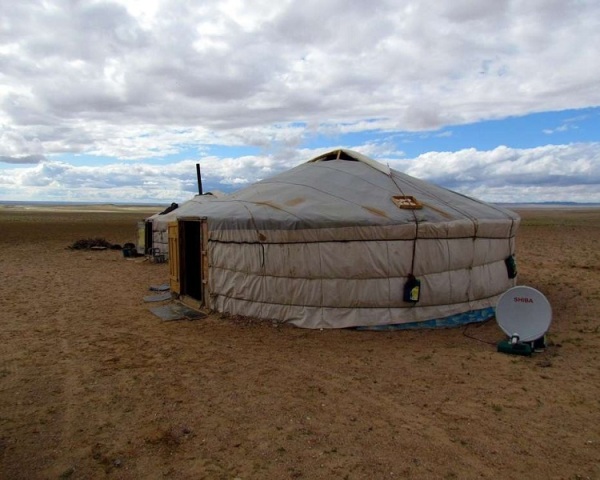
Image: David Berkowitz@flickr
Fast Facts
Continent: Asia
Area: 1,564,115.75 km2
Capital: Ulan Bator
Population: 2,854,685
Currency: Tögrög
Official Languages: Mongolian
Independence Day: December 29, 1911
Type Of Government: Parliamentary republic
Interesting & Fun Facts About Mongolia
-
The official language of Mongolia is Mongolian. Apart from that, Turkic, Russian, English and other Mongolian dialects are also spoken there.
-
Majority of the people in Mongolia are Tibetan Buddhists Lamas, followed by Muslims.
-
The main ethnic groups in Mongolia include Mongol (mostly Khalkha Mongol), Turkic and Russian.
-
The currency of Mongolia is Togrog/Tugrik.
-
The capital of Mongolia is Ulaan Bator
-
Mongolia follows the system of ‘Parliamentary Republic’.
-
Mongolia is the 6th largest country in Asia and the 18th largest country in the world.
-
Mongolia is the second-largest landlocked country of the world, after Kazakhstan.
-
Nairamdal (4,374 m), situated in the Mongolian Altai mountain range, forms the highest point in Mongolia.
-
With an average elevation of 1580 m, Mongolia is amongst the highest countries in the world.
-
The Gobi Desert of Mongolia is the place where fossilized dinosaur remains were found in 1920s, along with the first dinosaur eggs.
-
Mongolia is the least densely populated country in the world. It has a population density of 1.9 people per square mile.
-
Majority of the people in Mongolia led the life of nomad till as late as the mid-20th century.
-
Orkhon Valley Cultural Landscape of Mongolia is a World Heritage site. It includes Kharkhorum, the 13th & 14th century capital of the Mongol Empire.
-
Mongol Empire included most of Asia and was also spread over Europe, as far as Hungary, during its heydays.
-
Mongolia was divided into two parts: Inner Mongolia (southern Mongolia) and Outer Mongolia (northern Mongolia), in the 17th century, by Manchu Qing Empire (China).
-
Outer Mongolia declared independence in 1911. However, it came under Chinese occupation in 1919. In 1921, Outer Mongolia finally gained freedom from China.
-
The People's Republic of Mongolia was declared around end-1924.
-
Inner Mongolia, now known as the Autonomous Region of Nei Mongol, continued to be a part of China.
-
Diplomatic relations between Mongolia and the UK came into being only in the 1960s.
-
It was only after the introduction of reforms in the USSR, by Gorbachev, and arrival of democracy in Eastern Europe that Mongolian Democratic Union was formed, in 1990.
-
In 1992, a new Constitution was formed that recognized Mongolia as an independent, sovereign republic.
-
The annual Mongol Rally is a rally that starts in London and ends in Ulaanbaatar, the capital of Mongolia. The rally covers a journey of eight thousand miles, by car (1000cc) or motorbike (maximum 125cc).
-
The world’s oldest national park, the Bogd Khan National Park is located in Mongolia. The park was built in 1778.
-
Ulaan Bator, the capital city of Mongolia is the coldest capital city in the world!
-
In the winters, vendors sell ice-creams from paper boxes as there is no need of a refrigerator at -30 °C.
-
The 131 foot statue of Genghis Khan, outside Ulaan Bator, is the world’s tallest statue of a horse.
-
There are more sheep than people in Mongolia!
-
In Mongolia, wooden electricity poles are attached to a concrete base, because without it the pole would simply snap from the pressure of the freezing ground.
-
The Mongolian Stock Exchange is the smallest in the capitalist world.
-
Mongolians do not name their horses; they refer to them by color.
How to Cite


See also
More from iloveindia.com
- Home Remedies | Ayurveda | Vastu | Yoga | Feng Shui | Tattoos | Fitness | Garden | Nutrition | Parenting | Bikes | Cars | Baby Care | Indian Weddings | Festivals | Party ideas | Horoscope 2015 | Pets | Finance | Figures of Speech | Hotels in India : Delhi | Hyderabad | Chennai | Mumbai | Kolkata | Bangalore | Ahmedabad | Jaipur
- Contact Us Careers Disclaimer Privacy Policy Advertise With Us Lifestyle Sitemap Copyright iloveindia.com. All Rights Reserved.