Ellora Caves, adorned with rock-cut architecture, are situated near Aurangabad city of Maharashtra. With this article, explore some fun and interesting facts about Ellora Caves of India.
Facts About Ellora Caves
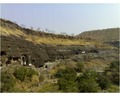
One of the biggest and the most impressive rock temple complexes in the world, Ellora caves are a group of temples that were built between the 5th and the 10th centuries AD and also happen to be a World Heritage Site. These temples are elaborately decorated with paintings and intricate rock carvings that attract tourists from around the world. Ellora caves are one of the best specimens of rock-cut architecture in India. They are situated at a distance of approximately 30 km from Aurangabad, a city in Maharashtra. The caves represent one of the largest rock-hewn monastic-temple complexes in the world. Of the 34 famous caves at Ellora, caves 1 to 12 belong to Buddhism, 13 to 29 are Brahmanical (Hindu) caves and the rest - caves 30 to 34 are Jaina (Jain). In case you want to know more about Ellora caves, make use of the fun and interesting facts provided below.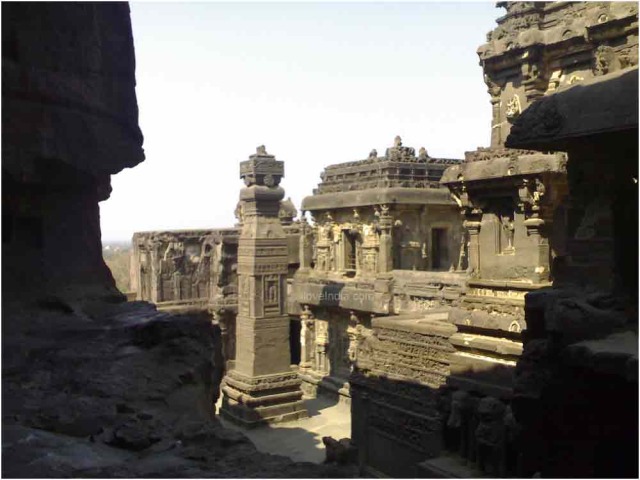
Fast Facts
Location: Aurangabad, Maharashtra
Built In: 5th-10th Century AD
Dynasty: Rashtrakuta
Highlight: Largest rock monastic temple complex in the world, World Heritage Site
Other names: ‘Verul Leni’, ‘Ellooru’
Interesting & Fun Facts About Ellora Caves
-
Ellora caves are locally known as ‘Verul Leni’.
-
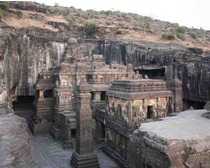
The Great Kailasa (Cave 16) at Ellora boasts of being the largest single monolithic excavation in the world.
-
Ellora caves have been hewn out of the volcanic basaltic formation of Maharashtra, known as ‘Deccan Trap’.
-
The caves are datable from circa 6th-7th century A.D. to 11th-12th century AD.
-
The hills that have served as the venue of Ellora caves form a part of the Sahyadri ranges of the Deccan. These ranges date back to Cretaceous era of the Geological time scale (about 65 million years ago).
-
There is inscriptional evidence related to Rashtrakuta Dynasty, on the back wall of the front mandapa of Cave 15.
-
The earliest Buddhist cave is Cave 6, which was constructed from 630-700.
-
The Great Kailasa (Cave 16) is attributed to Krishna I (c. 757-83 A.D.), the successor and uncle of Rashtrakuta Dantidurga.
-
Caves 1 to 10 and Cave 21 (Ramesvara) are generally attributed to the Kalachuris of Mahismati.
-
Brahmanical caves and two Buddhist caves (caves 11 and 12) are attributed to the Rashtrakuta times.
-
The style of execution and fragmentary inscriptions of the Jaina caves hint to their origin being post the reign of Rashtrakutas.
-
Ellora caves are open from sunrise to sunset all days of the week, except, Tuesday.
-
The Great Kailasa is a freestanding, multi-storied temple complex, built to resemble Mount Kailasa - the abode of Lord Shiva.
-
Dashavatara cave (Cave 15) at Ellora depicts the ten avataras of Lord Vishnu.
-
The entrance of Ramesvara cave (Cave 21) is adorned with figurines of River Goddesses - Ganga and Yamuna.
-
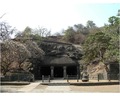
The design of Dhumar Lena (Cave 29) is similar to the cave temple on Elephanta Island, near Mumbai.
-
Buddhist caves mostly consist of viharas or monasteries, which include living quarters, sleeping quarters, kitchens, and other rooms.
-
Vishwakarma cave (Buddhist cave 10) is also known as "Carpenter's Cave" and houses a 15 foot statue of Buddha, seated in a preaching pose.
-
Amongst all Buddhist caves, the first nine (caves 1-9) are monasteries, while the last two - Do Tal (cave 11) and Tin Tal (cave 12) have three stories.
-
The Jain caves at Ellora stand adorned with exceptionally detailed art works and rich paintings on the walls and the ceilings; some of which are still visible.
-
Chhota Kailash (cave 30), Indra Sabha (cave 32) and Jagannath Sabha (cave 33) are the most remarkable Jain caves.
-
Ellora caves, in combination with Ajanta caves, have been declared a UNESCO World Heritage Site.
-
The Hindu caves were constructed during the Kalachuri period from the 6th century to the end of the 8th century. Most of these temples contained scriptures and wall carvings depicting the wedding rituals of Goddess Parvati and Lord Shiva.
How to Cite


See also
More from iloveindia.com
- Home Remedies | Ayurveda | Vastu | Yoga | Feng Shui | Tattoos | Fitness | Garden | Nutrition | Parenting | Bikes | Cars | Baby Care | Indian Weddings | Festivals | Party ideas | Horoscope 2015 | Pets | Finance | Figures of Speech | Hotels in India : Delhi | Hyderabad | Chennai | Mumbai | Kolkata | Bangalore | Ahmedabad | Jaipur
- Contact Us Careers Disclaimer Privacy Policy Advertise With Us Lifestyle Sitemap Copyright iloveindia.com. All Rights Reserved.