Here is an interesting peep into the life and times of Alva Myrdal, a Swedish sociologist and politician. Read on to know about her contribution towards the betterment of society.
Alva Myrdal Biography
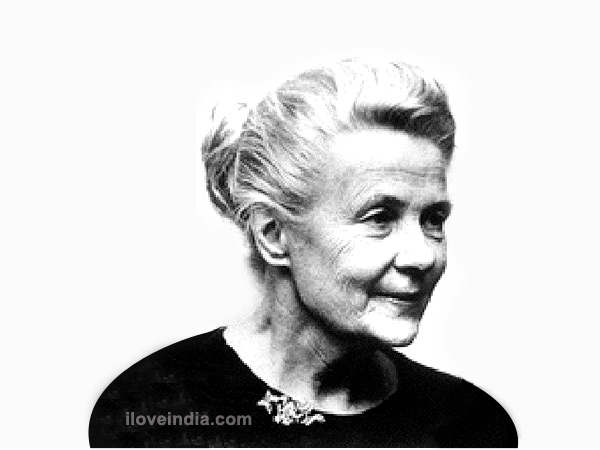
Alva Reimer Myrdal was born on 31st of January 1902 in Uppsala, Sweden. She was one of the five children born to middle-class parents Albert and Larsson Reimer. Her father was a building contractor and was also involved in local politics. He was a steadfast social democrat whom Myrdal admired. Myrdal had a complex relationship with her mother though. Alva Myrdal learnt and gained the desire to contribute to the betterment of society from both her parents. Alva Myrdal was an intelligent child who went to attend the University of Stockholm, where she earned her B.A. degree in Scandinavian languages and literature and the history of religion in 1924.
Early Life
After her marriage, both Alva and her husband moved to the United States in the year 1929 on Rockefeller fellowships. In the U.S., Alva pursued her interest in education by studying the nation’s experimental schools, particularly a program of early education administrated by Yale University professor Arnold Gessel. With an inspiration to study further, Alva returned to Sweden a year later to attend the University of Geneva from 1930-31, ultimately transferring her credits toward a master's degree in social psychology at the University of Uppsala. Together with her husband, Alva made a major contribution in the 1930’s in promoting social welfare. They were joint authors of a book entitled “Crisis in the Population Question ", and she was also actively engaged in the discussion on housing and school problems.
She was a prominent member of the Social Democrat Party in Sweden, and in 1943, was appointed to that party's committee with the task of drafting a post-war program. Also, in that year, she was appointed to the Government Commission on International Post-War Aid and Reconstruction. After the Second World War, Alva dedicated and devoted most of her time and energy to international questions and issues. From 1949 – 1950, she headed the UNO’s section dealing with ‘welfare policy’, and from 1950 – 1955, she held the position of the chairman of UNESCO’s ‘social science section’. She was the first woman to hold such a prominent position in the UN.
In the year 1962, Alva Myrdal was elected to the Swedish Parliament and was sent to the ‘UN disarmament conference’ in Geneva as a Swedish delegate, a role she kept until 1973. In the year 1966, she was also made a ‘consultative cabinet minister’, a post which she held until 1973. It was as a vocal supporter of disarmament that got her the ‘Nobel Peace Prize’ which she shared with Alfonso Garcia Robles in the year 1982. Alva also played a leading role during the negotiations in Geneva. She emerged as the leader of the group of non-aligned nations that endeavored to put pressure on the two super-powers to show greater concern for concrete disarmament measures. "The game of disarmament", her book in which she expresses her disappointment at the reluctance of the USA and the USSR to disarm, is the product of her experience in Geneva.
Alva got married to Gunnar Myrdal in the year 1924, same as her graduation year. She gave birth to 3 kids, Jan Myrdal, Sissela Bok and Kaj Fölster, although their marriage was not a smooth and easy one due to Gunnar’s demanding job and Alva’s desire to be both a supportive wife and responsible mother.
Death
Alva Myrdal passed away on 1st February, 1986. The reason of her death is not known.
Timeline


More from iloveindia.com
- Home Remedies | Ayurveda | Vastu | Yoga | Feng Shui | Tattoos | Fitness | Garden | Nutrition | Parenting | Bikes | Cars | Baby Care | Indian Weddings | Festivals | Party ideas | Horoscope 2015 | Pets | Finance | Figures of Speech | Hotels in India : Delhi | Hyderabad | Chennai | Mumbai | Kolkata | Bangalore | Ahmedabad | Jaipur
- Contact Us Careers Disclaimer Privacy Policy Advertise With Us Lifestyle Sitemap Copyright iloveindia.com. All Rights Reserved.